

From Resistance to Science.
The History of Domaine aux Conseillans
Over four centuries: a place of attitude, a cradle of modern oenology — and, since 2023, a new chapter. (Map of the estate, 1820.)
A name as a stance.
Long before a castle stood here, the place already held significance. The name of the Lieu-dit "aux Conseillans" probably originated in the turmoil of the Wars of Religion – it referred to those who took sides ("conseillans et aydans"). When people spoke of the estate, they were not referring to property, but to a place of conviction.
Four centuries, one thread.
History here is not an adornment, but the foundation — from the name and the lab in the vineyard, to the present day.
-
1580-1610A Name as an Attitude
Long before a castle stood here, the place held significance. The name of the Lieu-dit "aux Conseillans" probably originated during the Wars of Religion — it referred to those who took sides ("conseillans et aydans").
-
1738Daban-Broca acquires the estate
Pierre Daban-Broca acquires the estate, which was then still known under the cadastral name “Panissaut”.
-
1751The Unity of Terroir
With the repurchase of the Métairie "La Lande", Daban-Broca reunites the parcels into the self-contained unit of forest, meadows, and vines that still defines the Domaine today.
-
1770The cartographic evidence
The estate is precisely marked for the first time on the famous Carte de Belleyme, thus proving the physical existence of the domaine as an agricultural enterprise.
-
1808The Manor
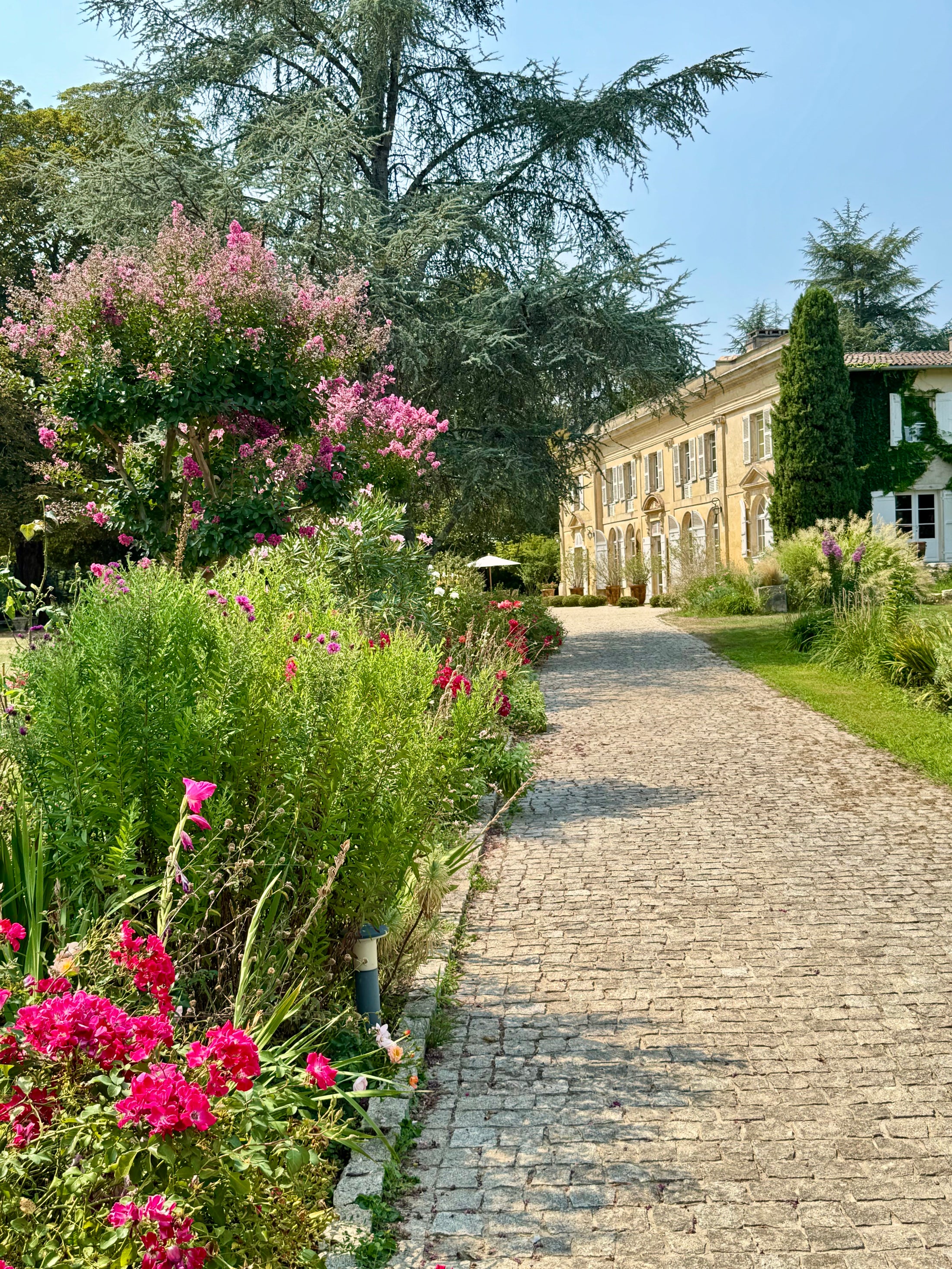
Jacques Daban-Broca, the buyer's son, builds the manor around the turn of the century onto an older house whose staircase survives to this day; the south façade still stands as it did then. In 1808 his son Jean sells the estate to Joseph Gabet — the house is new, but its interior is not yet finished.
-
1813The official christening
In the Napoleonic Cadastre (Section A1, Plot 116), the property is officially registered. The name "Panissaut" disappears, and "Domaine de Conseillans" is recorded.
-
1896The exam
Oidium, phylloxera and mildew destroy almost the entire vineyard. Of around 45 hectares, only 2.5 hectares of vines remain — the Domaine falls into a long sleep.
-
1897The Keepers
The Guillot de Suduiraut family acquires the weakened estate and ensures its survival into the next century.
-
1938The Laboratory in the Vineyard
Jean Ribéreau-Gayon bought the estate and, over decades, turned it into his experimental farm: as one of the key founders of modern oenology, he deciphered malolactic fermentation here.
-
1949The doctrine
Ribéreau-Gayon founded the Institute of Oenology in Bordeaux. The knowledge gained at the Domaine spread from here around the world.
-
1975Habitat protection
In December 1975 the entire Domaine is placed under nature protection as a “Site Classé” — a belated confirmation of the unity of nature and culture.
-
2002The tradition
After more than 60 years of ownership by the Ribéreau-Gayon family, Serge and Sylvia Ruiz take over the estate and tend to the old vines.
-
2011The Foundation of the Future
Bruce Jackson and Irina Krasovskaya are extensively renovating the cellar technology and setting the stage for the next act.
-
2023A new set: LaSuite
Marc and Ellen Ruhland take over the estate. Under the name LaSuite, each wine becomes a movement in a musical suite — the origin “aux Conseillans” remains anchored on the label.

Where modern enology matured.
For decades, the Domaine was the winery of Jean Ribéreau-Gayon – one of the leading founders of modern oenology. Here, in his "laboratory in the vineyard," malolactic fermentation was deciphered; his legacy still influences every decision made today. The estate is so good because it was his.
The thread doesn't break.
From the name as an attitude to the wine as a suite—whoever reads the place, reads four centuries with it.
New Bordeaux