

Music among the vines.
LaSuite aux Conseillans
From early morning until evening, classical music plays in our vineyards — quiet, steady, a fine pulse between leaves and grapes.
Why do we do this?
First of all, because it is beautiful.
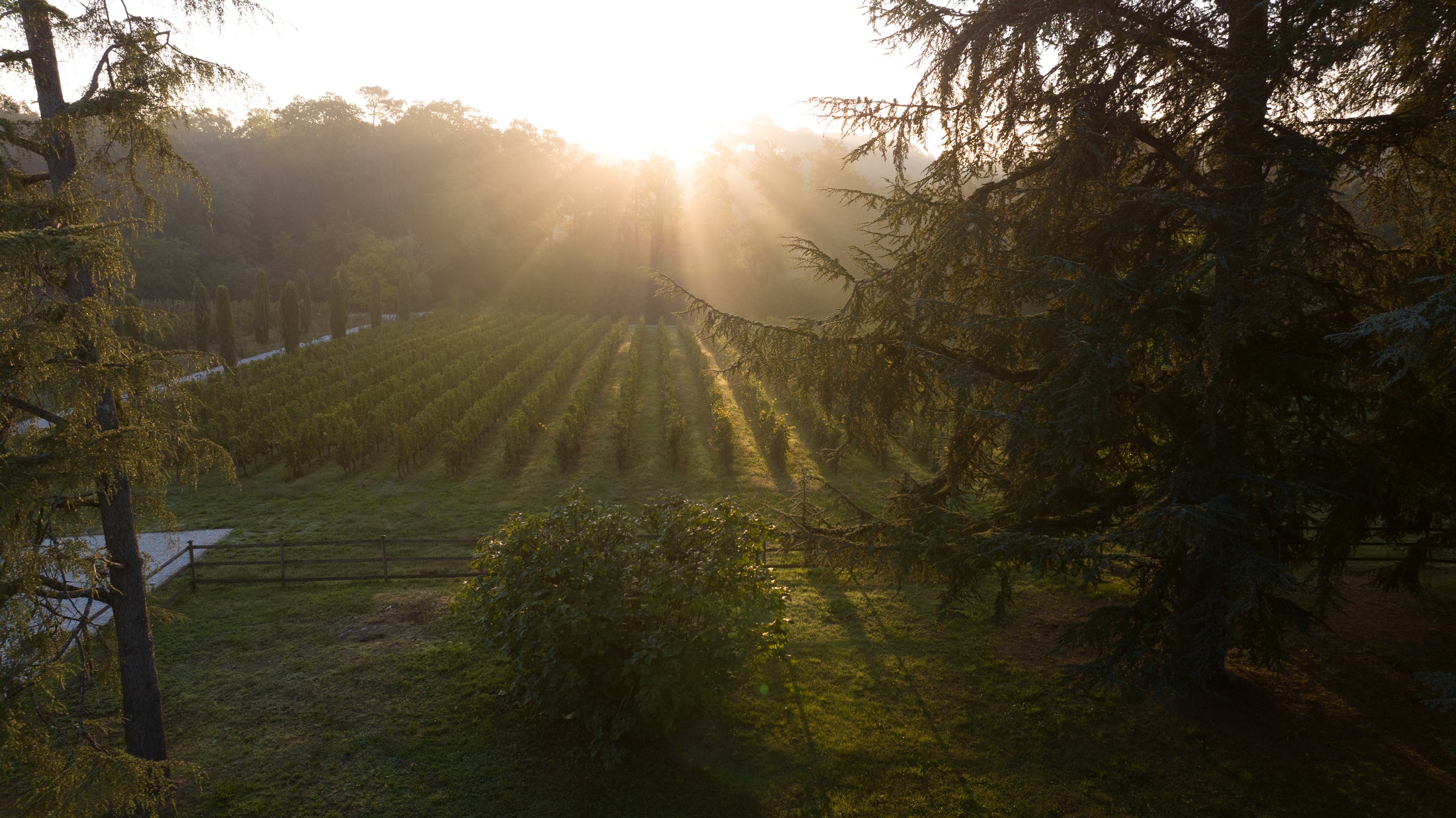
It begins early, just before the sun rises over the hills of the Premières Côtes de Bordeaux and the mist still lies deep in the rows. Anyone walking through the vineyard then hears a cello between the vines, a piano, a few bars of a symphony — daily from 6 a.m. to 9 p.m.
Our teams spend hundreds of hours among the vines, and with a calm melody in the background the work at the vine is done more serenely and more attentively. That care is found again later in the glass.
“Wine is one of the most civilized things in the world.”Ernest Hemingway

What the research suggests
We take a sober view of this. For decades the Domaine aux Conseillans was the estate of Jean Ribéreau-Gayon, one of the co-founders of modern oenology, who researched here for many years and shaped the estate. That legacy keeps us with the facts: we try things, we observe, and we keep what proves itself.
Plants have no ears, but they do respond to vibration — in research this is called mechanostimulation. Studies suggest that fine sound waves can set cellular processes in motion and influence parameters such as photosynthesis (for an overview see Hassanien et al., 2014). The research is young; we understand our sound as an experiment that we read year by year in the vitality of the vines. The volume stays moderate, roughly at the level of a conversation.
Something plays in the cellar too
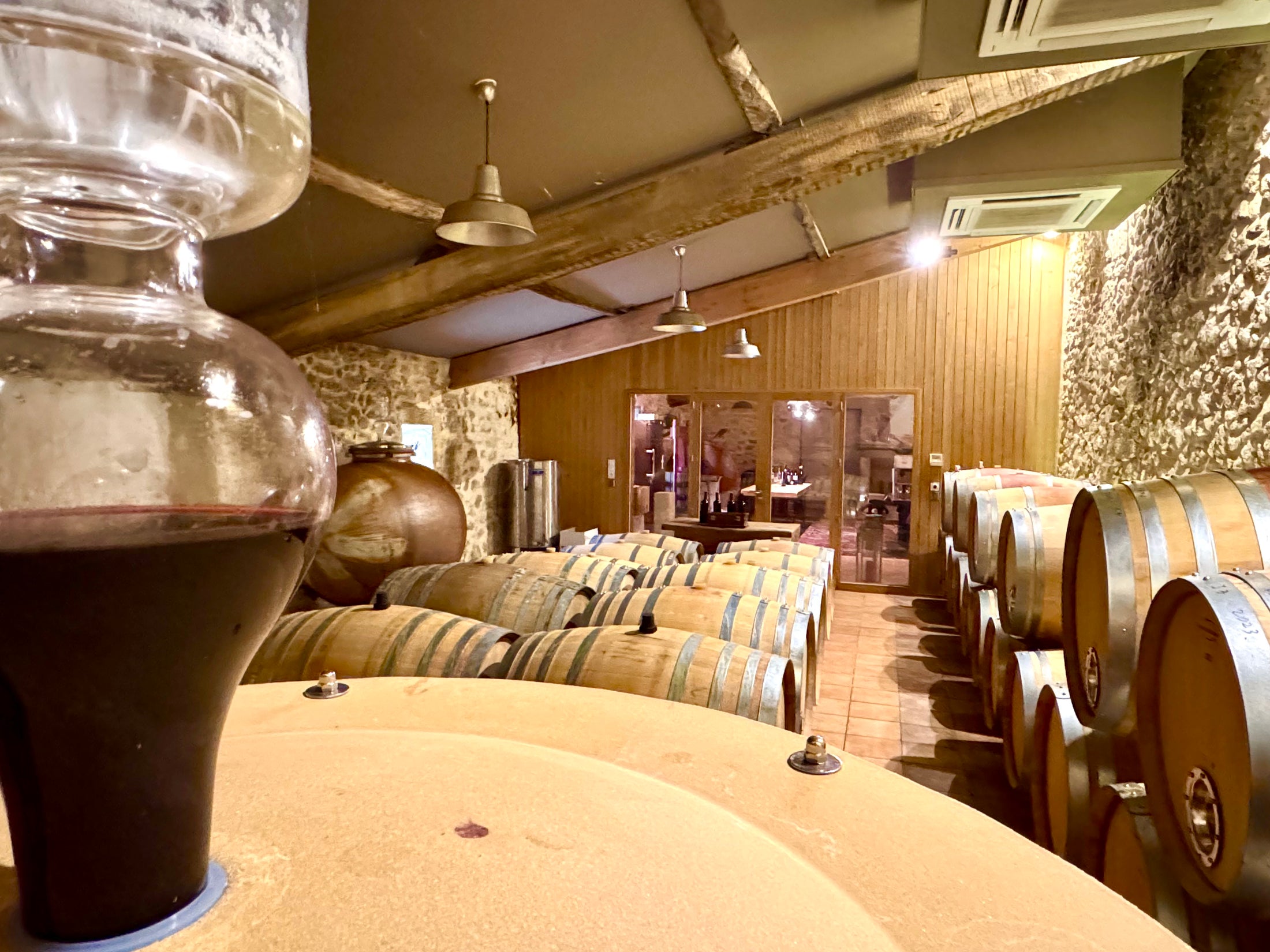
The sound does not stop at the edge of the vineyard. During fermentation, vibrations act like gentle stirring: they keep the yeast in motion for longer instead of letting it settle too early.
We treat this as an open experiment as well, and measure it against what we already know about our work in the cellar.
A held note
Above each of our bottles stands the fermata, the musical sign for the held note. It suits what we do among the vines: holding a sound and giving things time.
More on the fermata
Consideration for the estate and nature
So that the music does not become an intrusion, we deliberately hold back volume and rhythm. Birds and wildlife quickly get used to a steady, harmonious sound; what is harder for them is the sudden, irregular noise of machinery. From 9 p.m. to 6 a.m. it stays quiet, so that the estate and its wildlife can come to rest. This practice is widespread internationally; we continue it in our own way.
The invitation
You do not have to believe in the physics behind it. But our experience shows that classical music creates a harmony that carries over to everything – to the vine, to people and to the moment. Simply come by and hear it for yourself.
Wine & Music