
Freedom · White wine, Vin de France
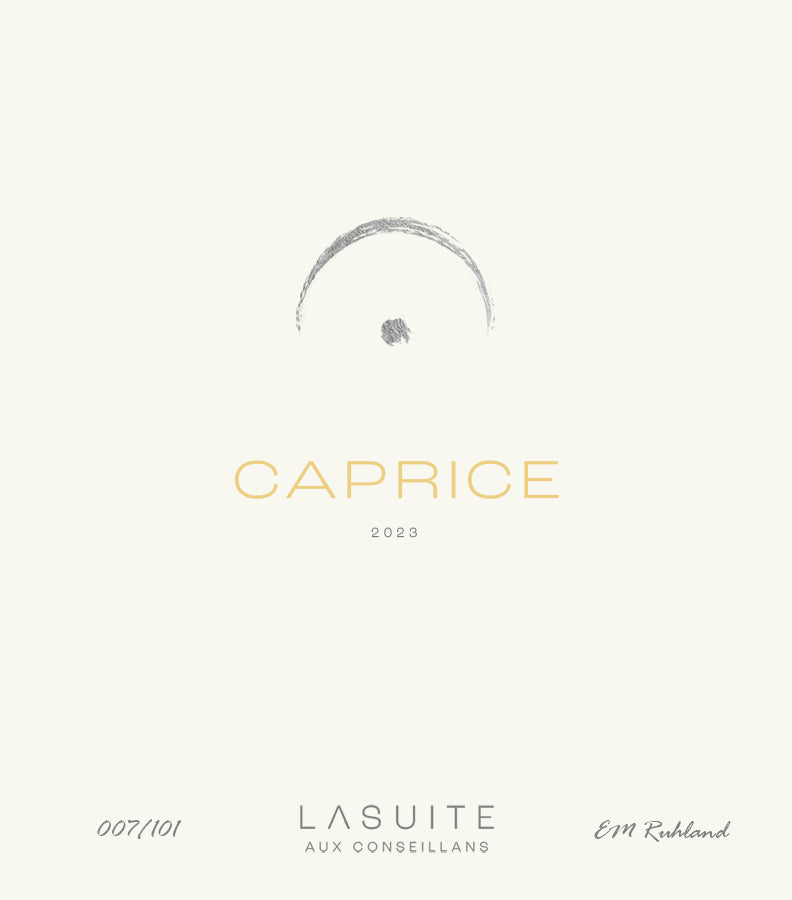
Caprice2023
Released only in its drinking phase — ready for the table.
Arriving
Like an afternoon at Cap Ferret.
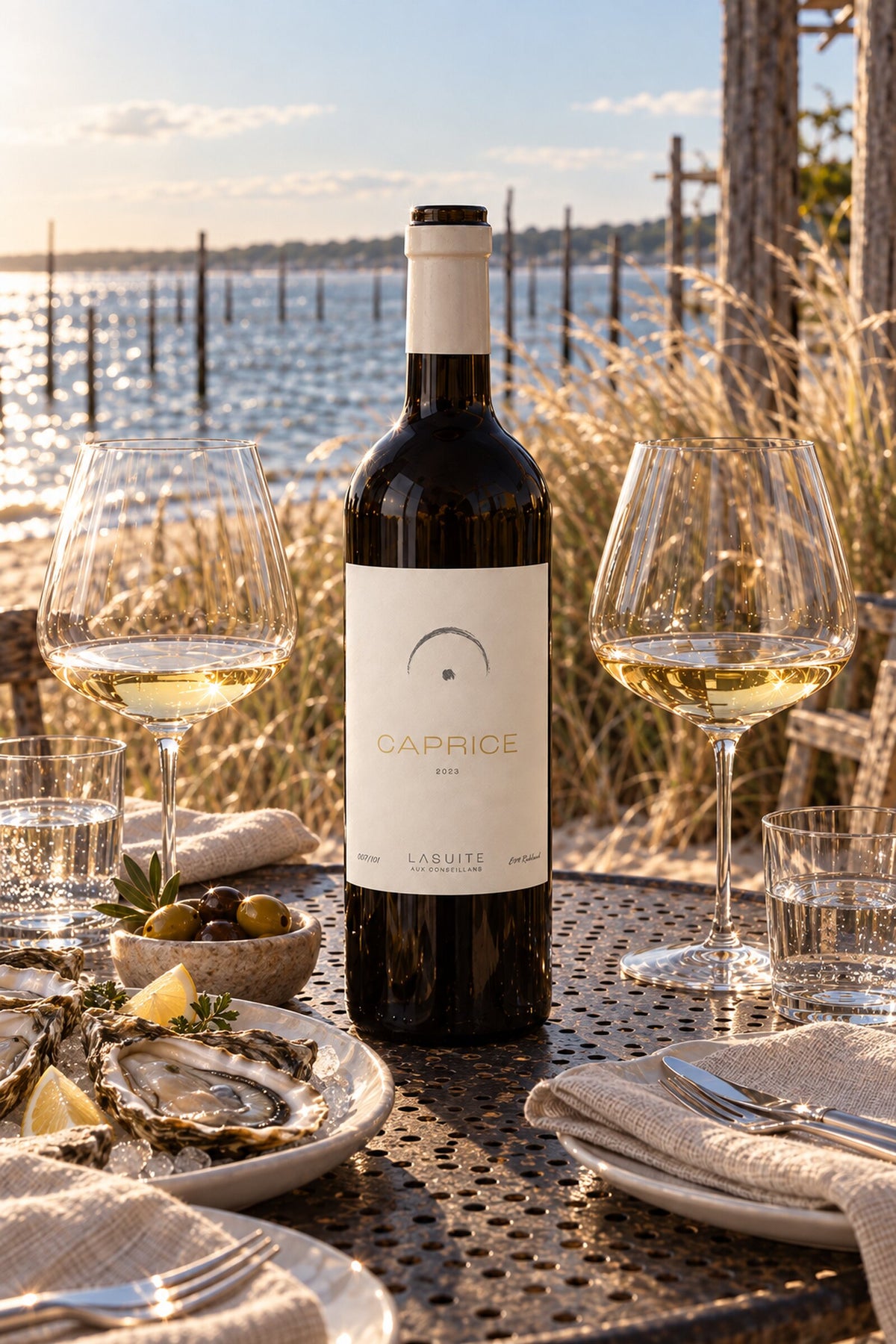
Flint and salt, slender and cool. A wine that goes its own way and stays precise.
Free in its ideas, yet played with precision – that is how a capriccio sounds, and how this wine tastes.
2023 (white): A warm year with successful flowering and fruit set, apart from slightly cooler periods in July. A tropically humid June brought the most severe downy mildew attacks in years; the remainder of the season was characterized by a "season in two halves" with heat spikes at the end of August/beginning of September and an unusually long harvest. The dry white wines are aromatic, precise, and fresh, with good acidity and moderate alcohol.
- Grape varieties
- 100% Alvarinho
- Limitation
- 101
- Ageing
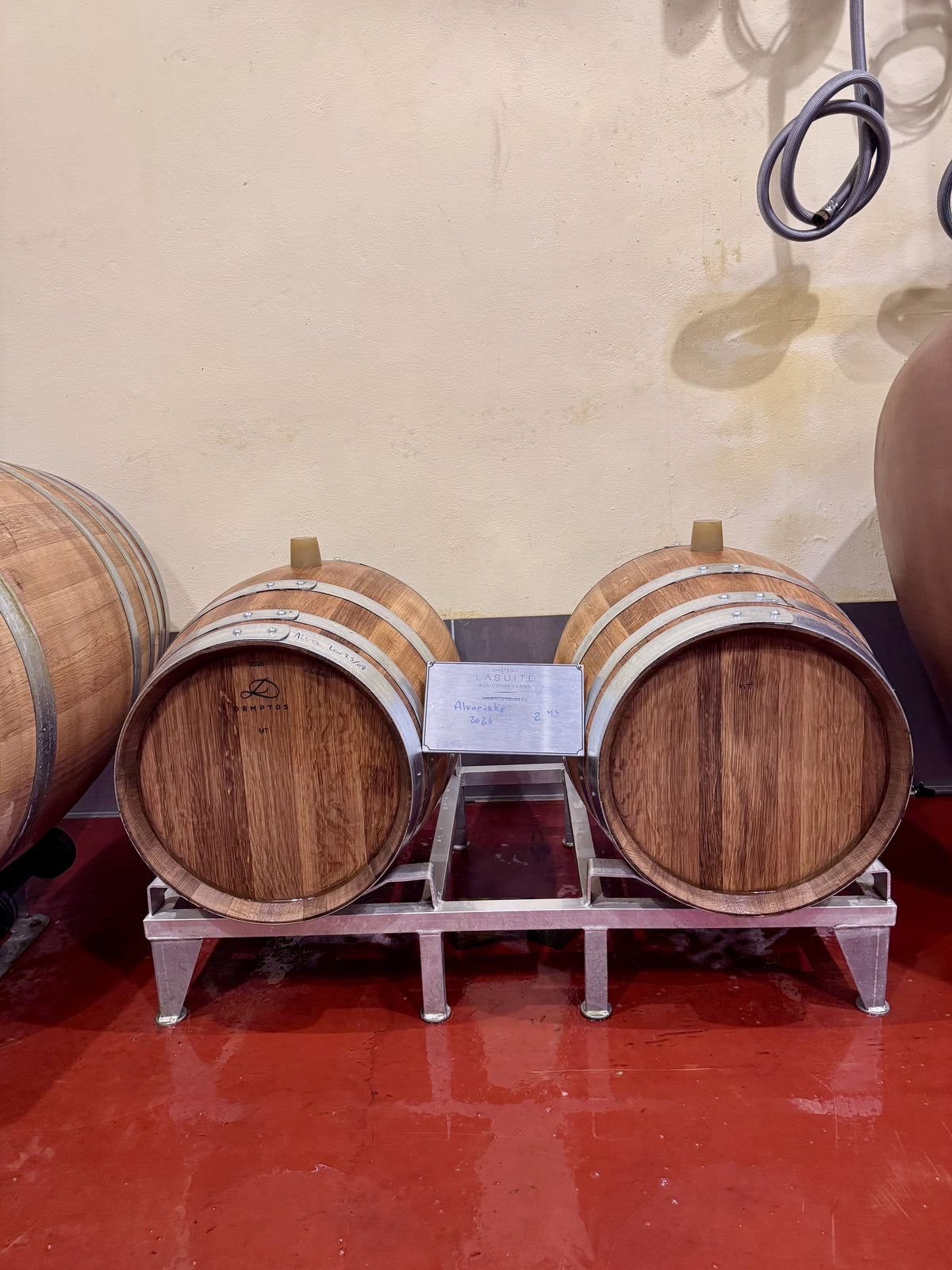
- Small wooden cask, reductive élevage
- Analysis
- 13 % vol
- Drinking window
- 2024 – 2033
- Serving temperature
- 9–13 °C
- Decanting
- Decant for 1 hour
Wind off the Atlantic
The first glass
The flavour profile of Caprice 2023
Flinty, smoky minerality and a salty trace, with restrained yellow fruit. On the palate reductive and straight: a taut, precise acidity sets the tone, the texture stays slender and cool rather than broad. Aged in a small wooden cask; mineral, salty and full of tension into the long finish.
- Flint
- Saline minerality
- Smoky
- Taut acidity
- Yellow fruit
Caprice is Alvarinho from a single parcel at the edge of the forest, made in the reductive school of the great white Burgundies. In the glass it shows flint and wet stone, a salty trace and restrained yellow fruit; on the palate it stays slender, cool and precise. Caprice 2023 matured in a small wooden cask. A white wine for curious drinkers, already a pleasure when young and able to age for years.
Why Caprice
A free form, played with precision.
A suite is a sequence of dances. Each has its own character, and only all together do they make the whole. That is how our estate is built: each cuvée is inspired by a movement of this suite and takes on the character of its form.The capriccio is one of the freest forms in music, full of ideas and yet played with great precision. Stravinsky gave his Capriccio for piano and orchestra exactly this blend of esprit and discipline. Our Caprice stands outside the sequence: a micro-cuvée from a single parcel at the edge of the forest, Alvarinho on Bordeaux soil, made in the reductive school. That is why there are only a few bottles of it, and why it tastes of flint and salt.
Caprice is our homage to freedom: independent in style, exact in execution.
Igor Stravinsky — Capriccio, 3rd movement
Harvest 2023
In the Domaine's cellar since the 2023 harvest.
Aged in our own cellar.
Aged in our own cellar, reductively and with little intervention, then bottle ageing until we consider the wine ready to drink.
Maturity — how it drinks today
In the middle of its drinking window
Optimal drinking window of Caprice 2023
2024 – 2033
Serving temperature 9–13 °C.
Our principles
Why we take the trouble
Ageing in our own cellar
Most of our wines go on sale only once they are ready to drink; until then they mature with us, and we carry the risk.
Composed plot by plot
Each plot is vinified separately; only at the end do we compose the cuvée from them.
Time as an ingredient
Depth takes time. We give the wines the years in barrel and bottle that they need.
Organic & HVE4
The Domaine's vineyards are certified organic and HVE4, set within a 19-hectare ecosystem of woodland, meadows, water and vines.
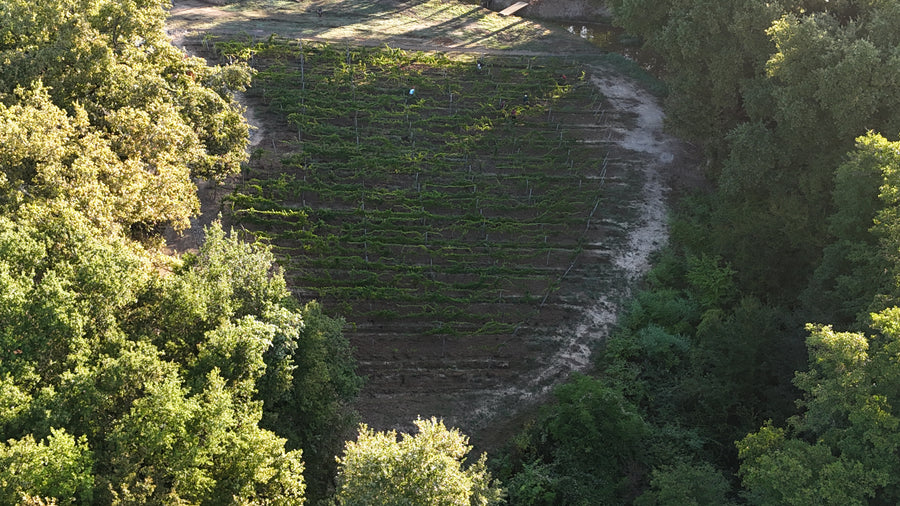
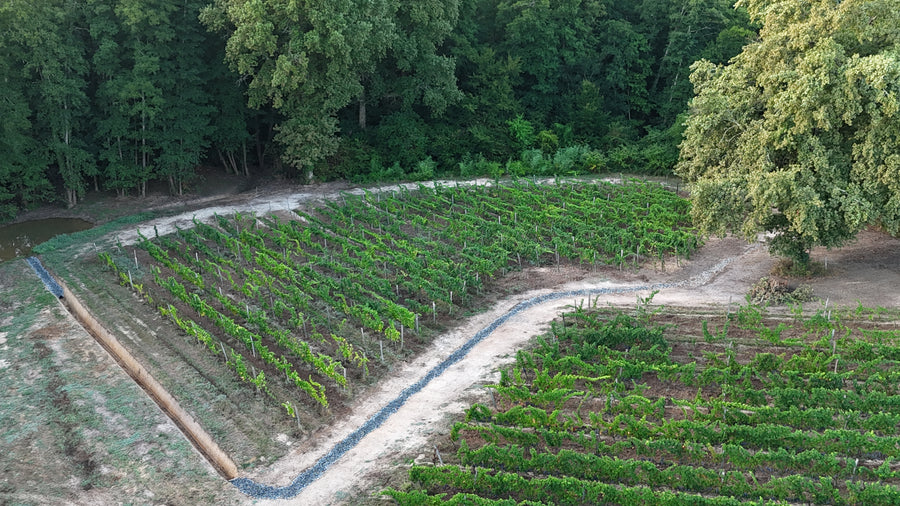
The terroir and the wine it yields
Where it comes from
The parcel map
Click on a parcel number to find out more about it.Tap a parcel number to find out more about it.

- ClayCool and water-holding: depth, structure, a long life.
- Clay-gravelWhere two worlds meet: strength with finesse.
- GravelWarm and draining: energy, precision, lift.
- SandLight and open: freshness and a free hand.
The blend of Caprice 2023
A single-variety wine, one origin
- 100%Alvarinho
Precision & method
In the tradition of modern oenology
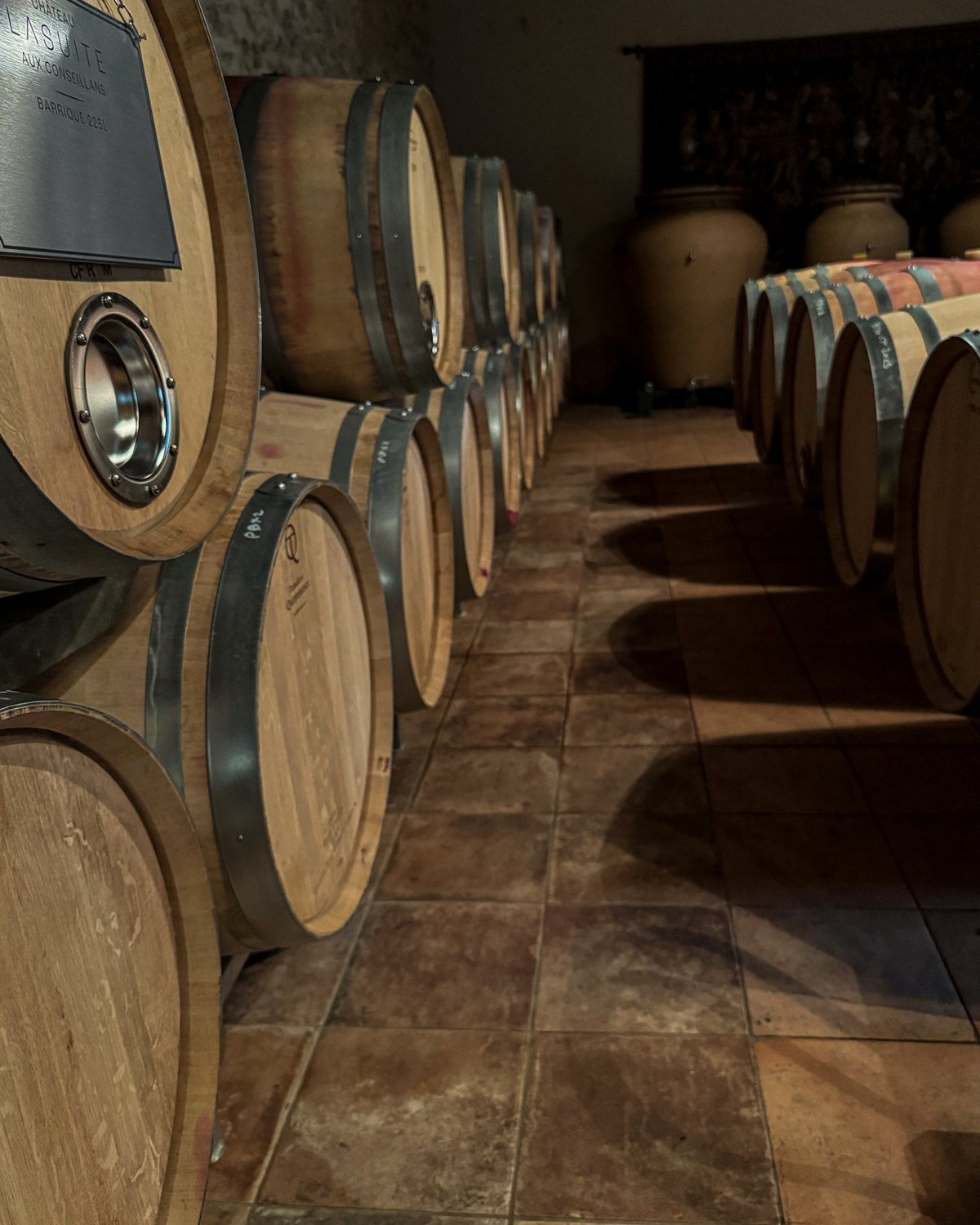
Aux Conseillans was for decades the Domaine of Jean Ribéreau-Gayon — one of the co-founders of modern oenology, founder of the Institute of Oenology at the University of Bordeaux (1949) and long-time owner of the estate. We work in that tradition: each plot analysed and vinified separately, the ageing guided under control, drinking maturity checked in a blind tasting.
For this place
A long road.
Regenerative farming, and one fine day carbon neutral: there is a long road ahead. Our vines are certified organic and HVE4, the highest level of France’s official environmental certification. Three examples of what we do beyond that.
- Hedgerows Some 2,000 shrubs, newly planted along the vines: nesting sites for birds, guiding lines for bats.
- Glass 405 grams. Glass is one of the largest sources of CO2 in a bottle of wine, which is why ours is light.
- Cork Diam Origine: cork, bound with a plant-based binder and beeswax. Free from cork taint, even after many years.
The second hour
After an hour in the decanter the reduction loses its edge, and flint and salt come through more clearly.
Your evening
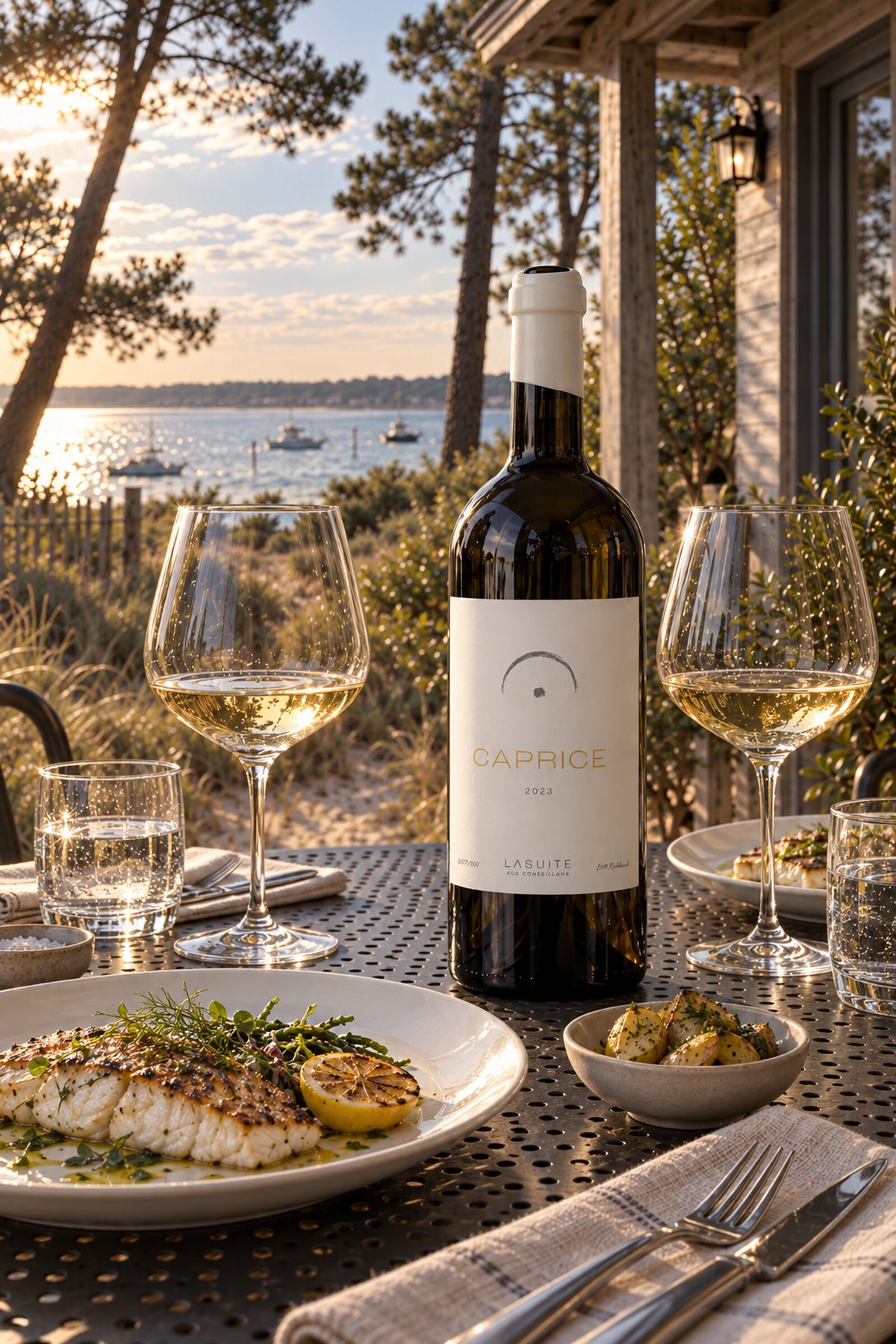
A wine for the table.
Dishes to pair
A selection from our recipe kitchen, matched to the structure and maturity of this wine.

Almejas a la marinera – clams in white wine, garlic & parsley
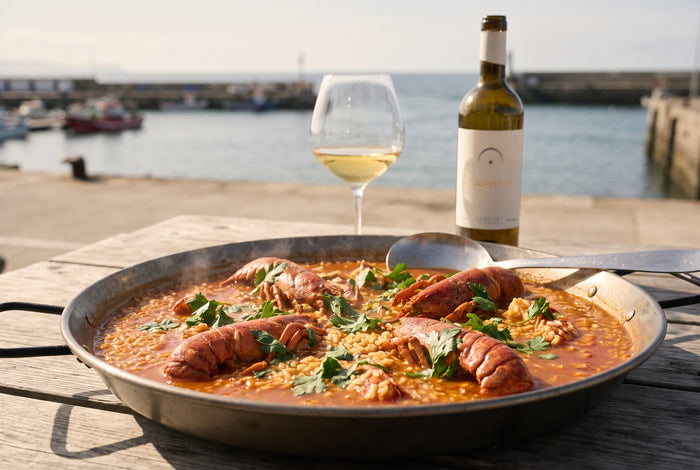
Arroz caldoso de bogavante – soupy lobster rice with saffron
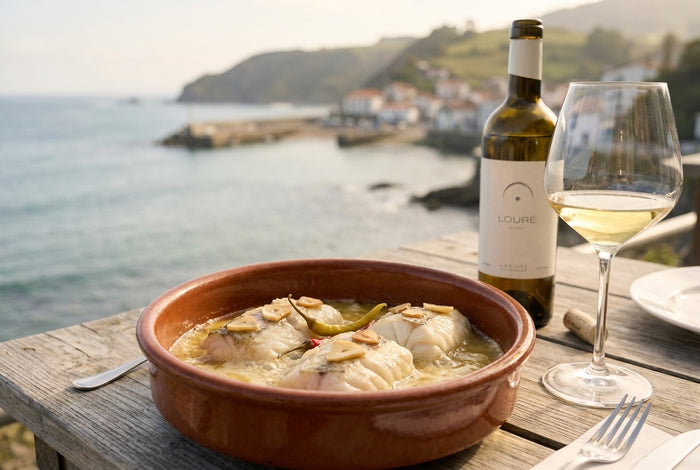
Bacalao al pil-pil – cod in emulsified garlic oil
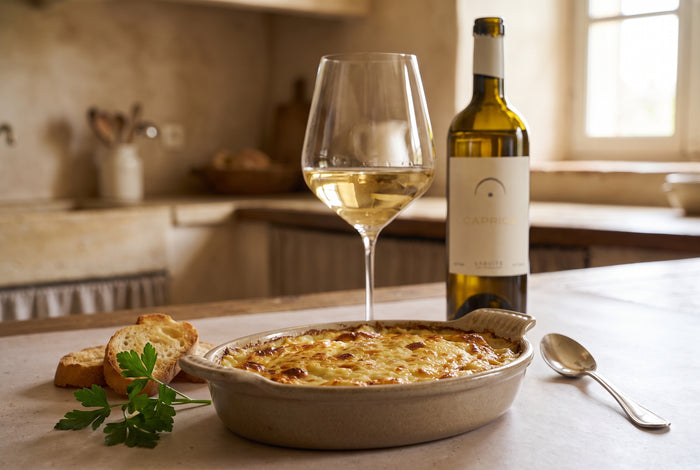
Brandade de morue – Provençal salt cod cream, gratinated
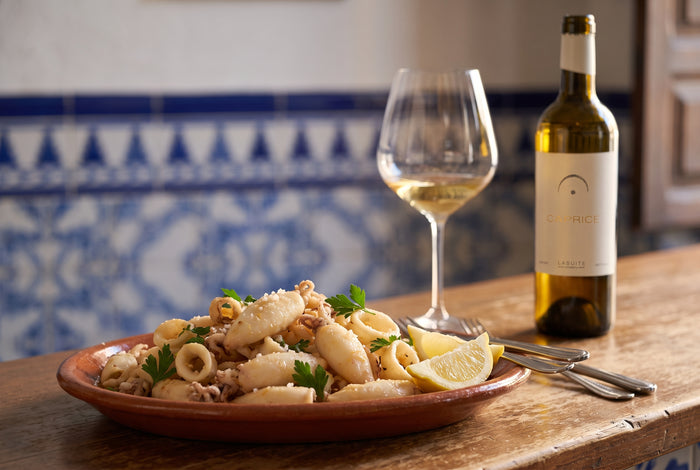
Chipirones a la andaluza – fried baby squid with lemon
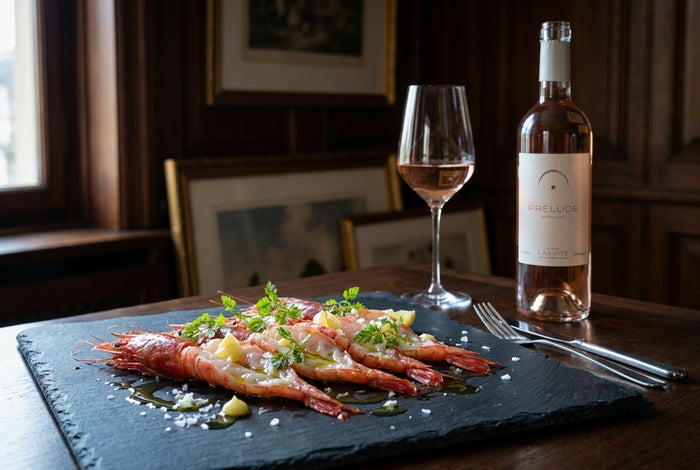
Crudo di gamberi rossi – raw red prawns, Sicilian style
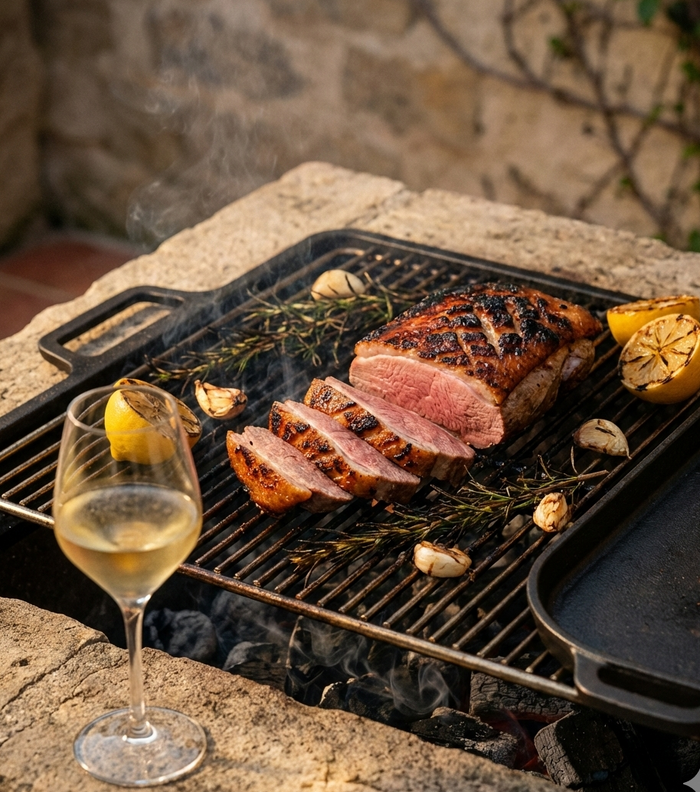
Grilled duck breast in Mediterranean herb marinade
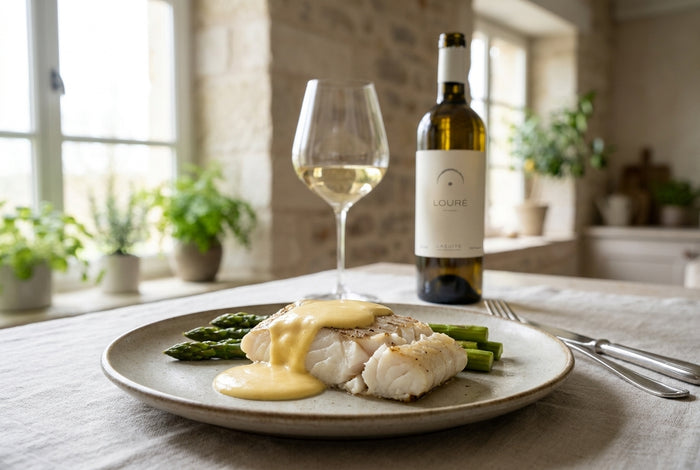
Flétan rôti, sauce hollandaise & green asparagus
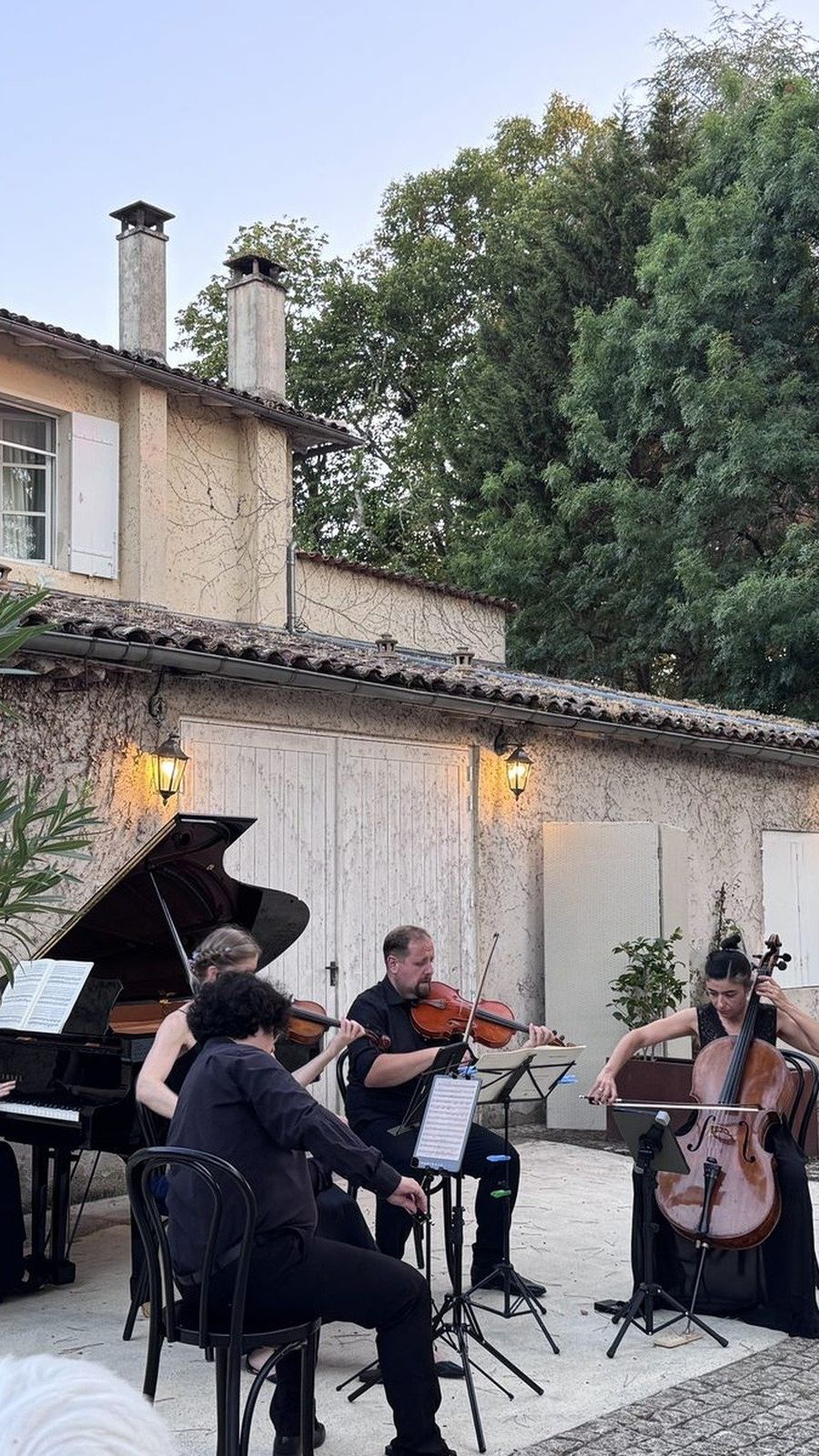
The mood to match the wine
A playlist for the moment
If you are a friend of classical music, here is a playlist that may suit your evening and the character of this wine. One possibility among many; listen in, if you like.
For your cellar
Available formats
Caprice 2023, Edition 101 bottles. Shipped directly from the estate — climate-controlled storage in our own cellar.
To get acquainted
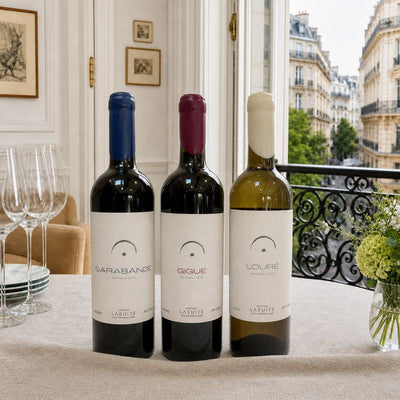
The Coffret Dégustation
Three movements of the Suite in one case — Sarabande 2015, Gigue 2016 and Louré 2024. €100 incl. shipping.
Frequently Asked Questions · Caprice 2023
Good to know
When should I drink the Caprice?
Released in 2025, it sits within its drinking window (2024–2033). A reductive white that gives pleasure young and can age over the years. Enjoy well chilled.
How do I serve it?
At 9–13 °C. An hour of air (decanting) opens the flinty minerality and takes the edge off the reduction.
What does Caprice taste like?
Reductive and straight: flint, wet stone and a salty trace, with taut acidity and a slender texture. In style it is close to the great white Burgundies of the reductive school.
Why is it called Caprice?
In music, a capriccio is a free, playful form that is nevertheless played with precision. Our Caprice is a homage to this freedom: Alvarinho, planted in 2019 on a small parcel at the edge of the forest and aged reductively, deliberately beyond the appellation, but not beyond precision.
Which grape variety and plot does it come from?
100 % Alvarinho from plot C15 — a sandy soil unlike anywhere else on the Domaine.
How was it aged?
In a small wooden cask, handled reductively, so that flint and salty minerality set the tone rather than the wood.
What does it pair with?
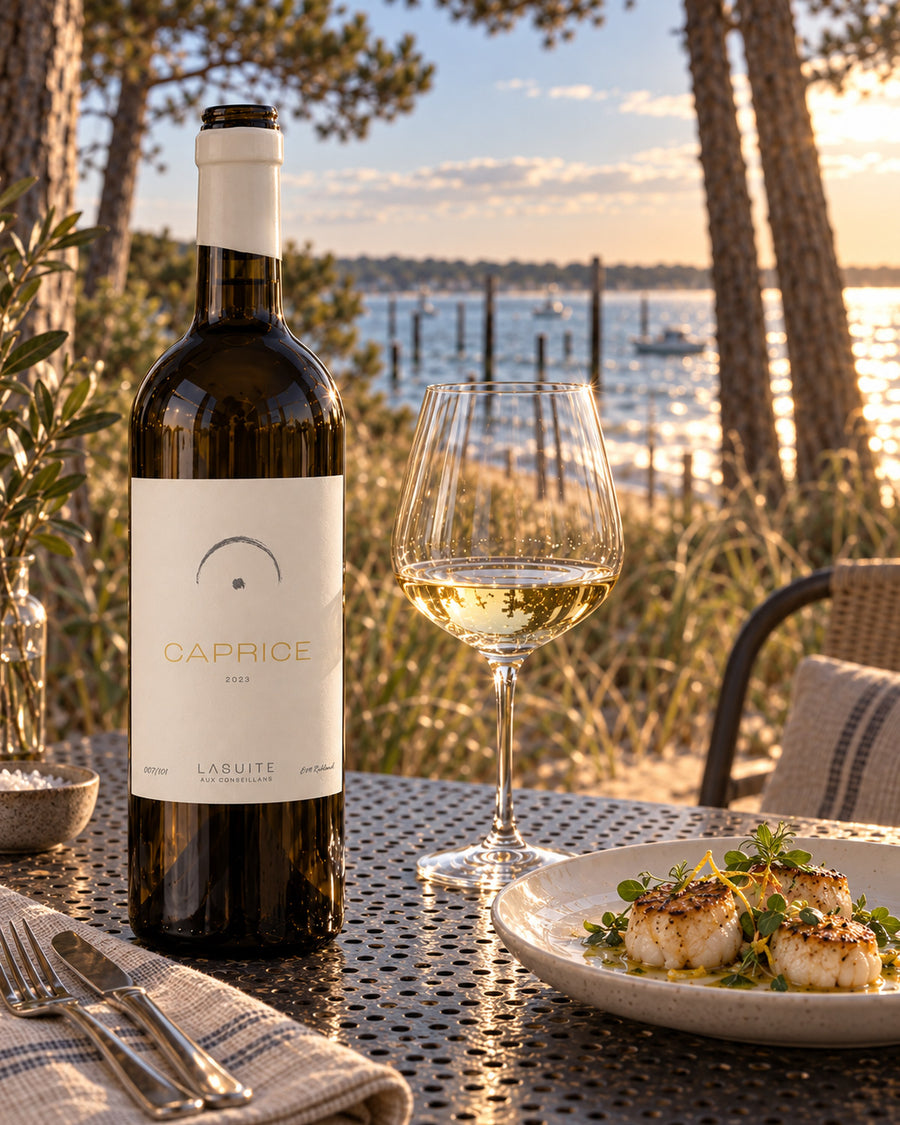
With seafood, fish and oysters, and with Asian cuisine too — a wine for the curious, seeking something wholly different from Bordeaux.
Is the wine organic?
Yes. The Domaine's vineyards are certified organic and hold HVE4, the highest level of the French environmental certification.
Technical data sheet · Caprice 2023
| Wine | Caprice 2023 |
|---|---|
| Estate | LaSuite aux Conseillans |
| Origin | Saint-Caprais-de-Bordeaux, France |
| Type | white wine |
| Appellation | Vin de France |
| Grape varieties | 100% Alvarinho |
| Plots and soils | C15 at the edge of the forest (Alvarinho, planted in 2019); sandy soil |
| Ageing | Small wooden cask, reductive élevage; then bottle ageing in our own cellar |
| Released | 2025 |
| Analysis | 13 % vol |
| Edition | 101 bottles |
| Drinking window | 2024 – 2033 |
| Serving temperature | 9–13 °C |
| Decanting | Decant for 1 hour |
| Aromas | Flint, Saline minerality, Smoky, Taut acidity, Yellow fruit |
| Viticulture | Organic-certified vineyards, HVE4 |
| Formats | 0.75 L (€50) |
| Place in the Suite | Outside the sequence, a micro-cuvée; “Freedom” |
| Musical reference | Igor Stravinsky — Capriccio, 3rd movement |
| Item number | LS-CAPR-23-075 |
The vintages
Caprice through the years
Every vintage plays the same movement, each in its own key. The bar shows when a vintage opens and how long it carries; the line marks today.
- 2023 Ready to drink
A warm year with a long harvest, aged in a small wooden cask; 101 bottles.
Drinking window 2024 – 2033This vintage -
2025
Maturing in the cellar
A mild winter, budbreak two weeks earlier than usual, then heavy rain over Easter that filled...
Drinking window 2028 – 2035View in the cellar - 2026 Maturing in the cellarView in the cellar
The repertoire
The other movements of the Suite
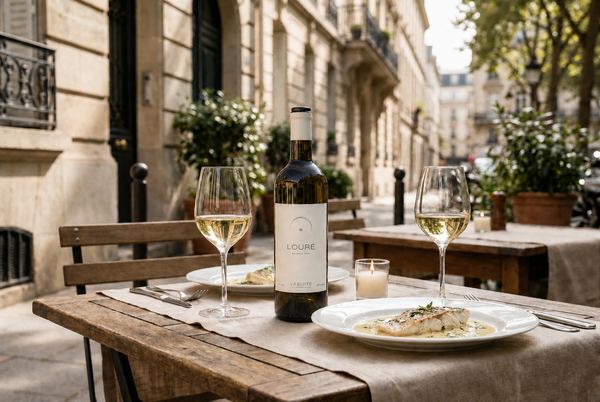
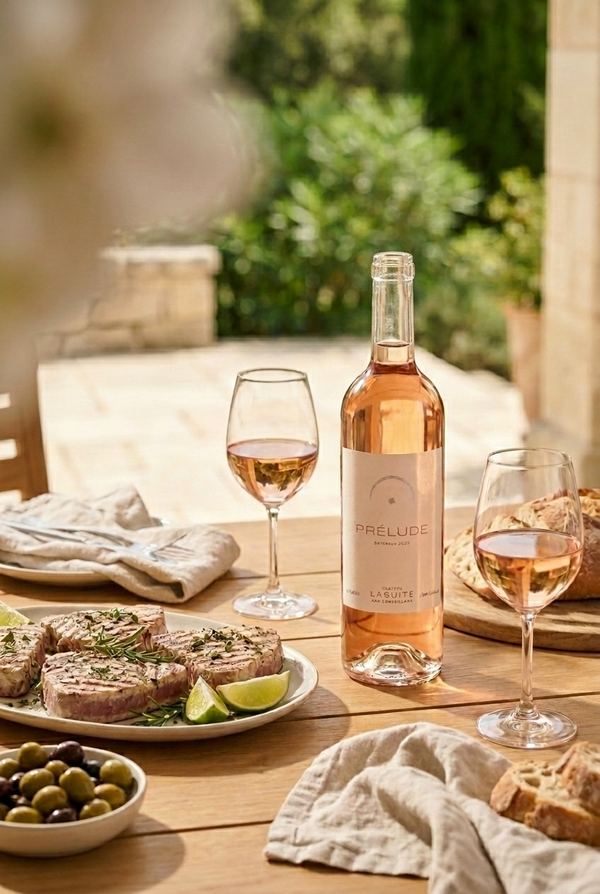
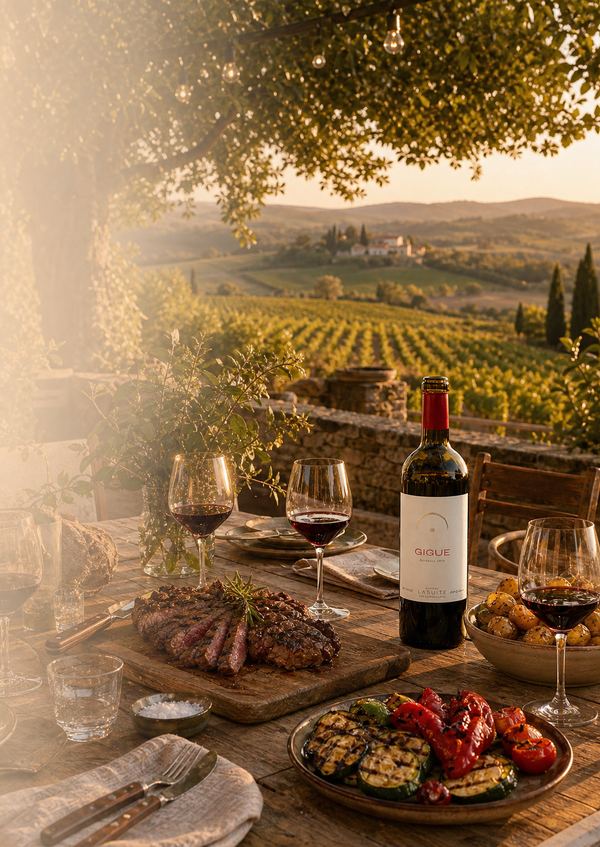
Each cuvée has its own voice, from the rosé to the red that needs decades. In weak years we skip one entirely; that is why the repertoire is rarely complete.
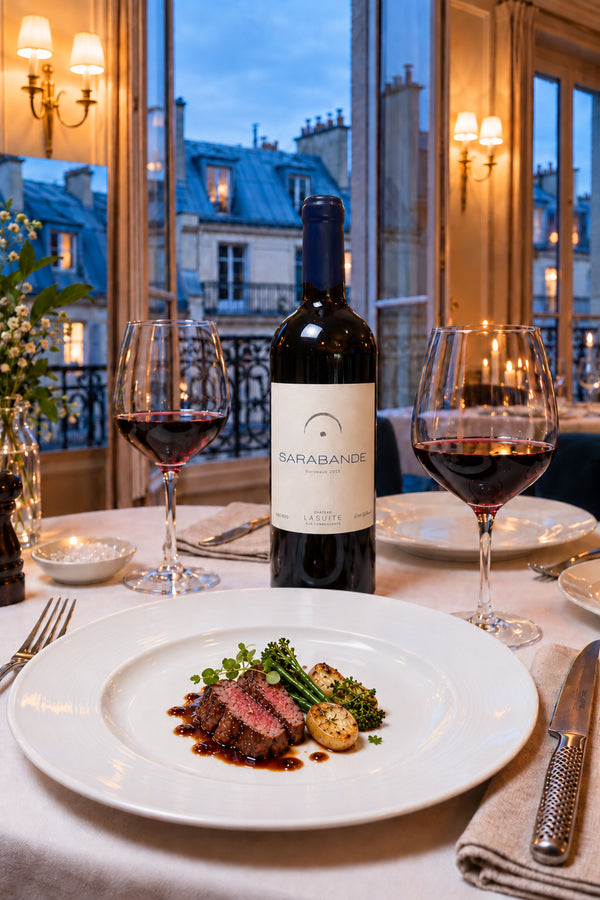
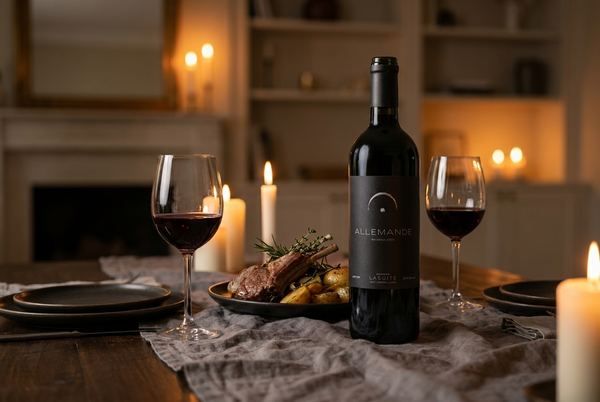
We release each wine only when we would most like to drink it ourselves.Marc & Ellen Ruhland
For us, time is an ingredient.